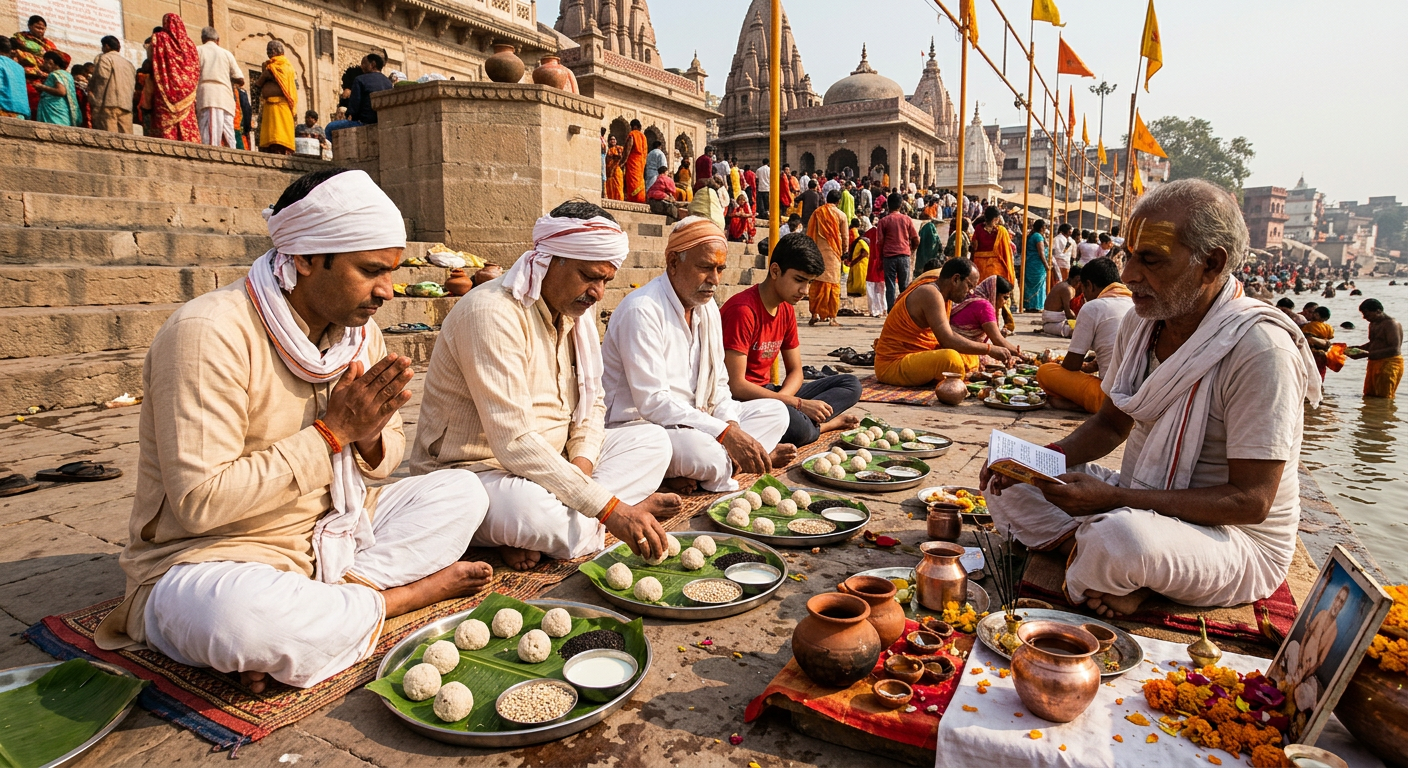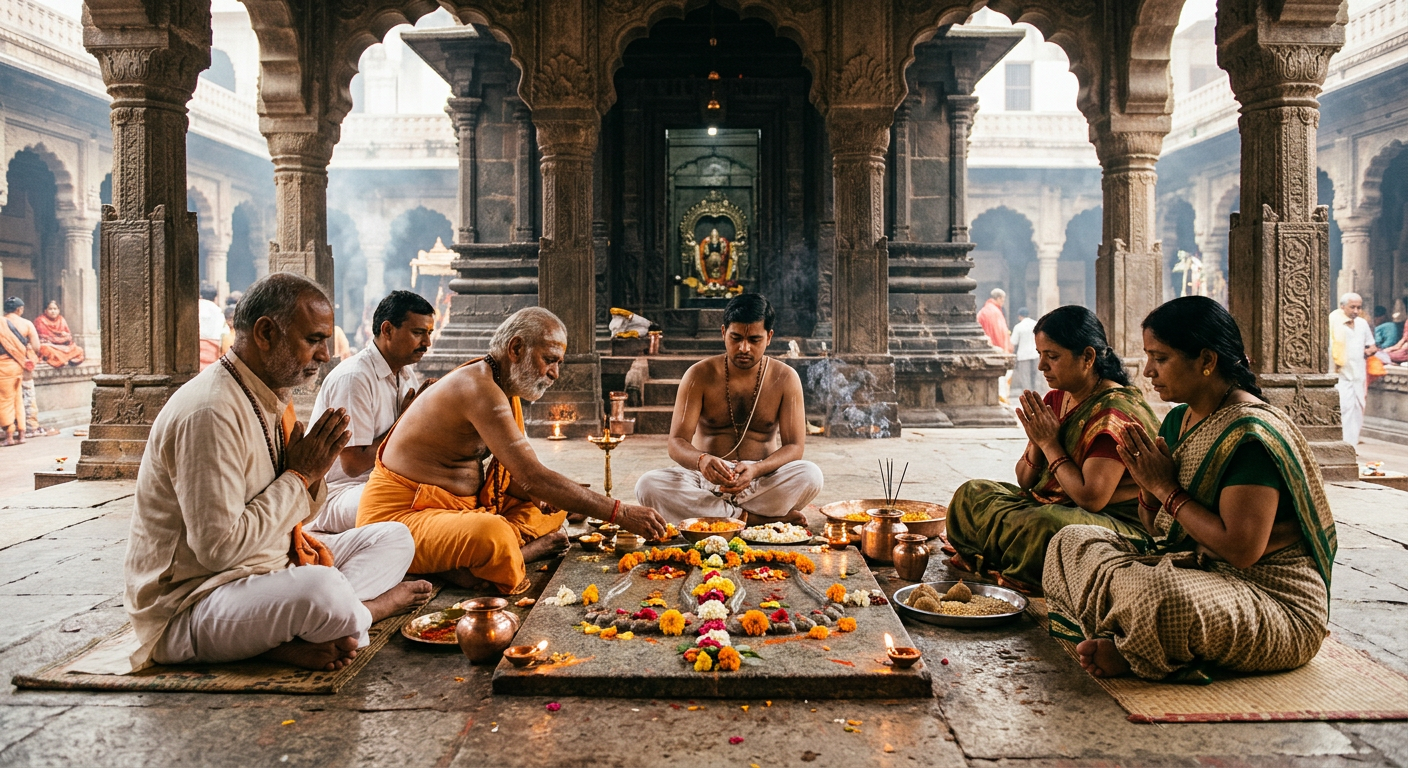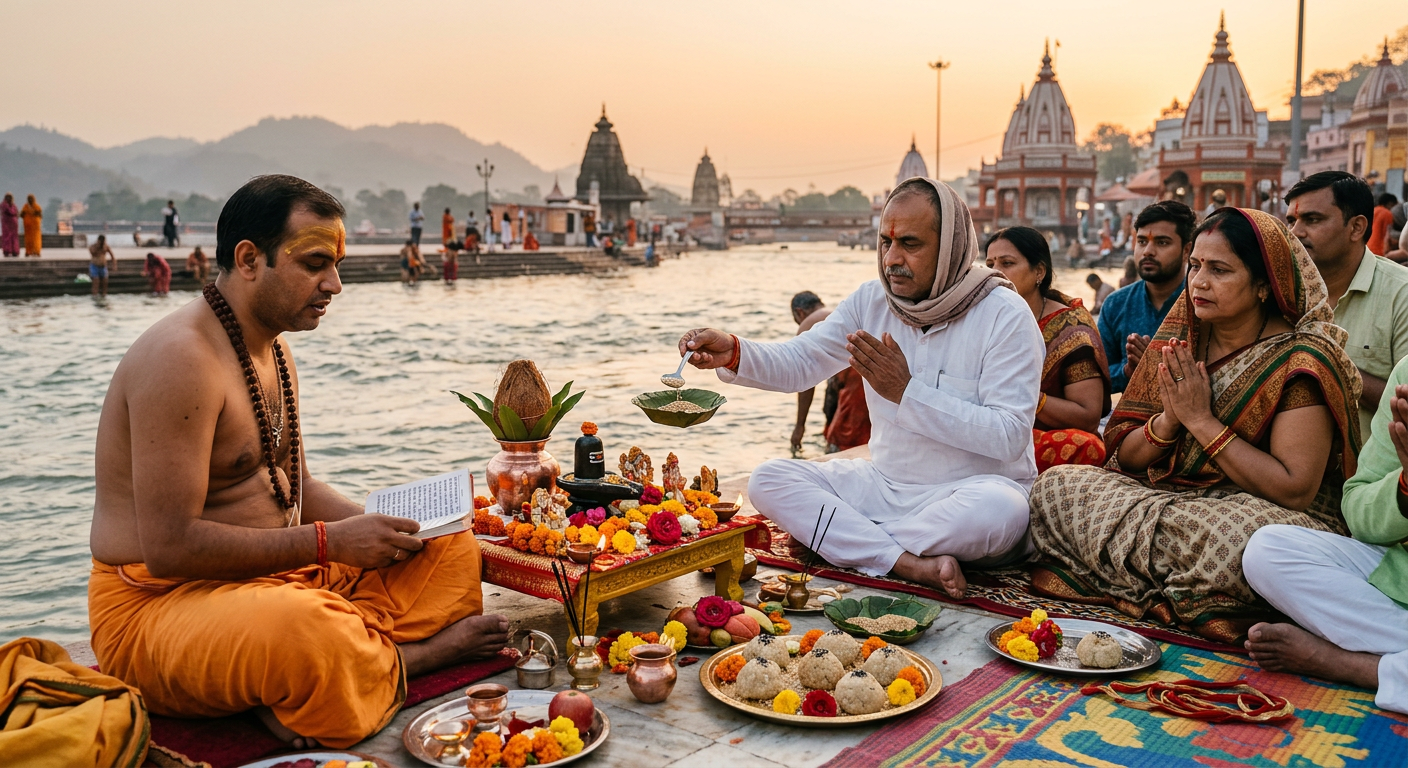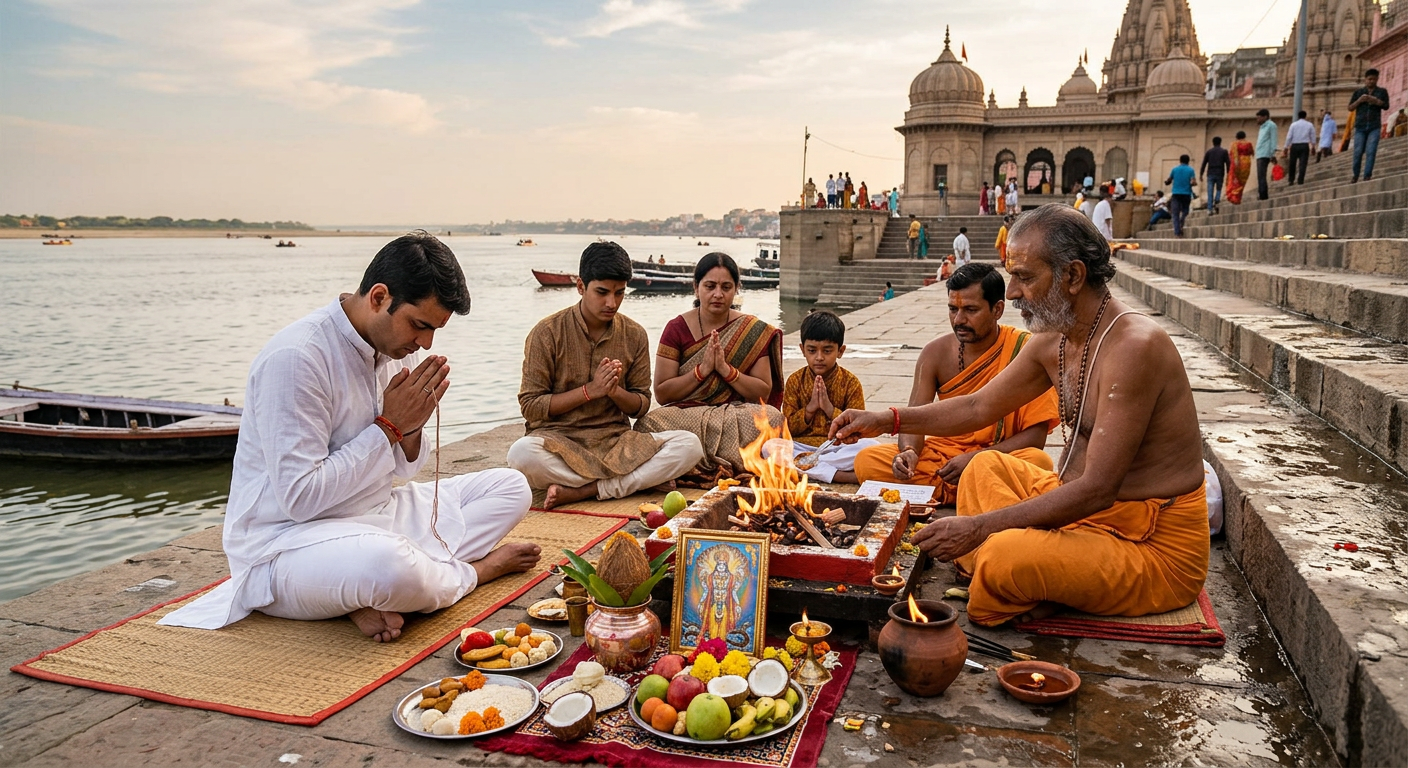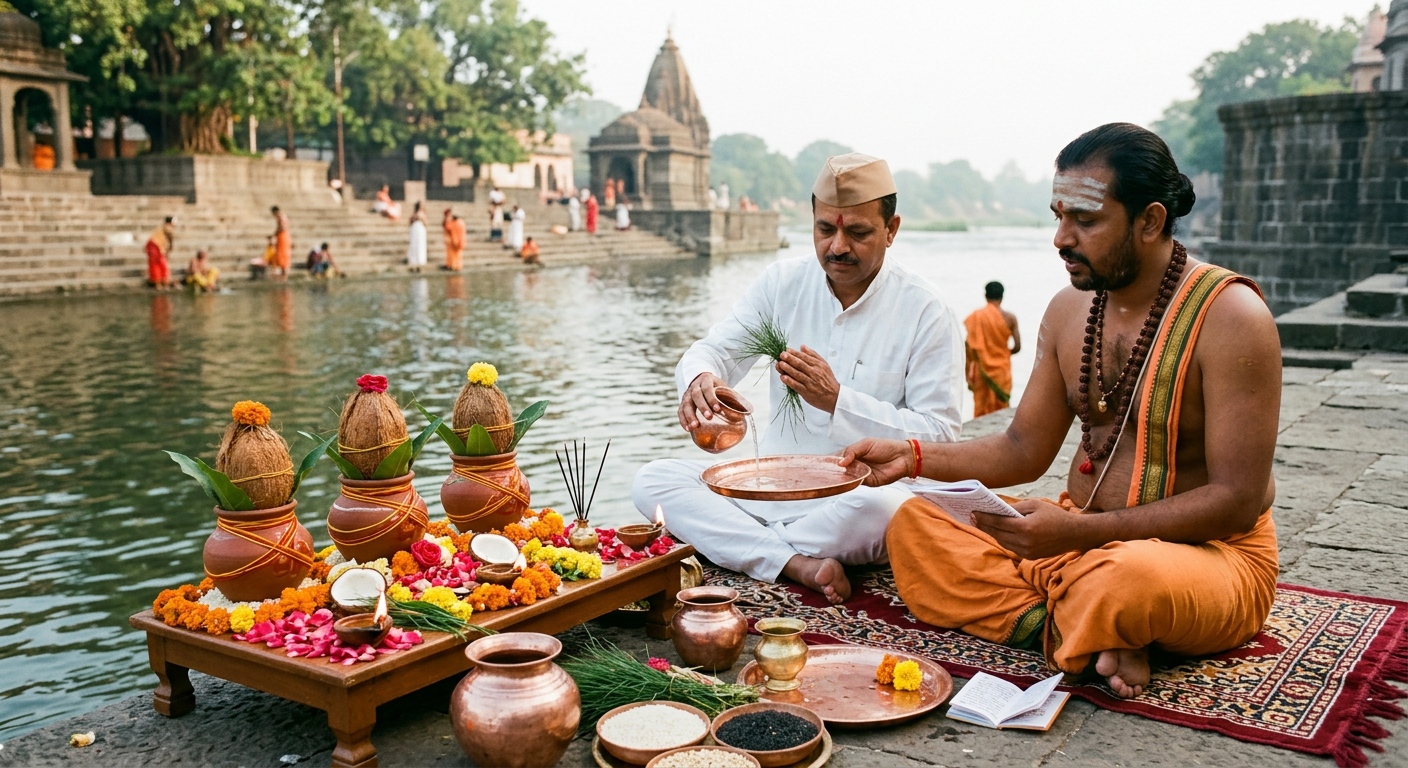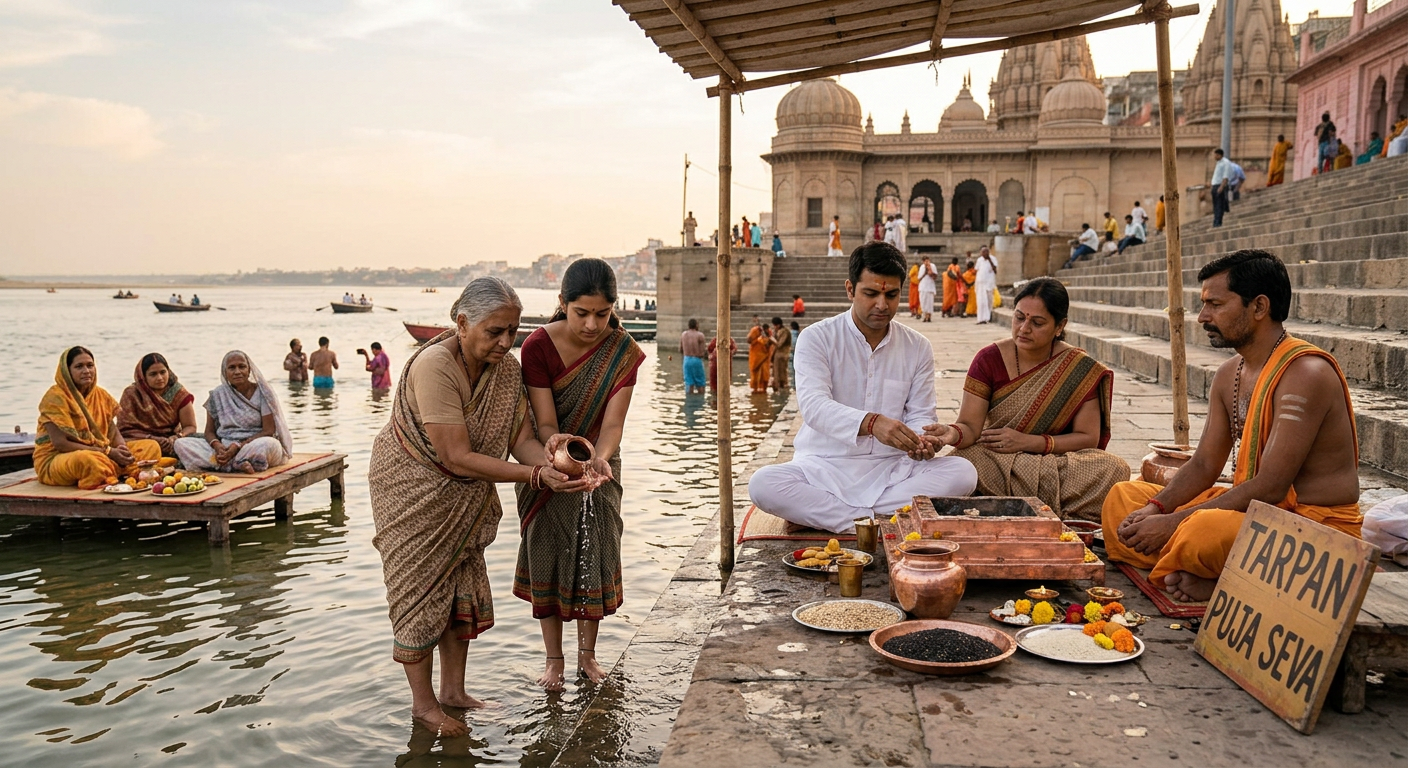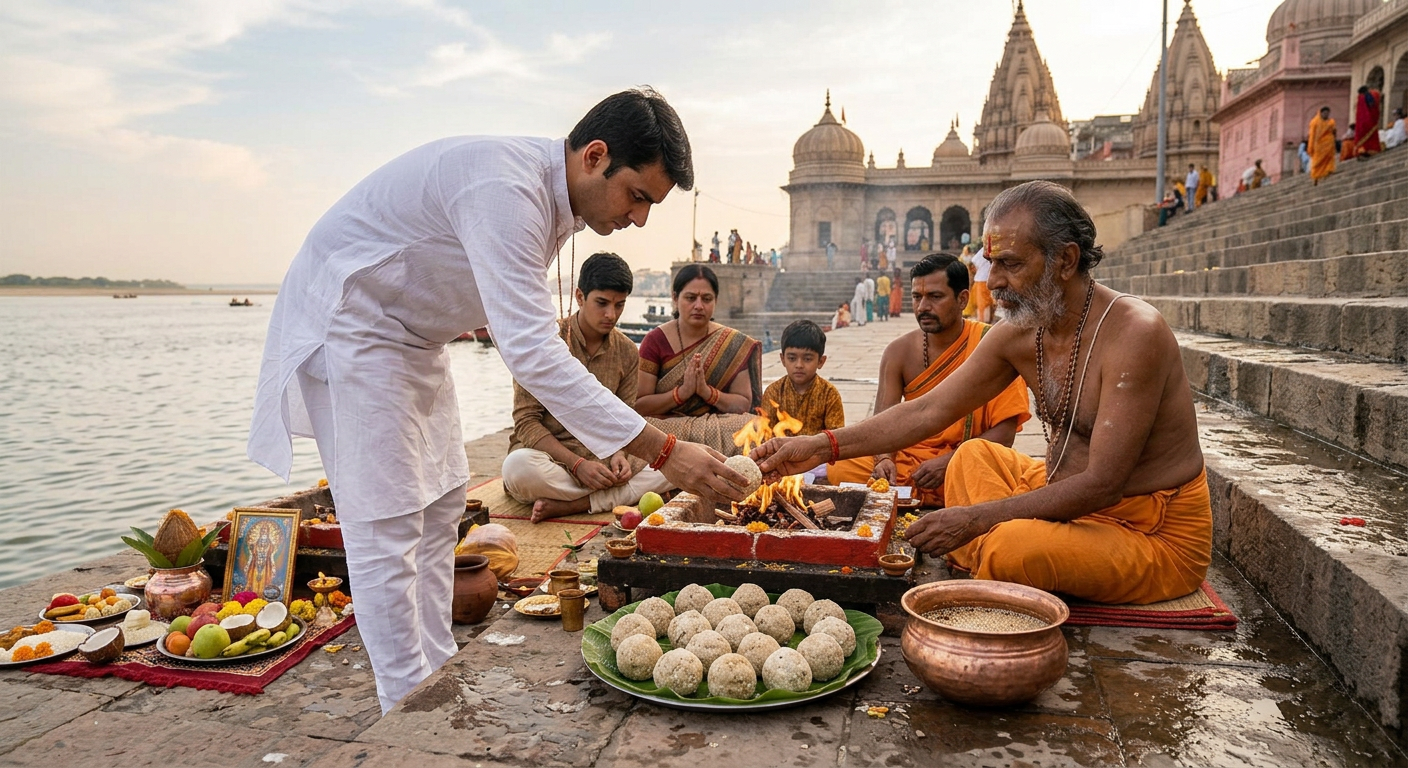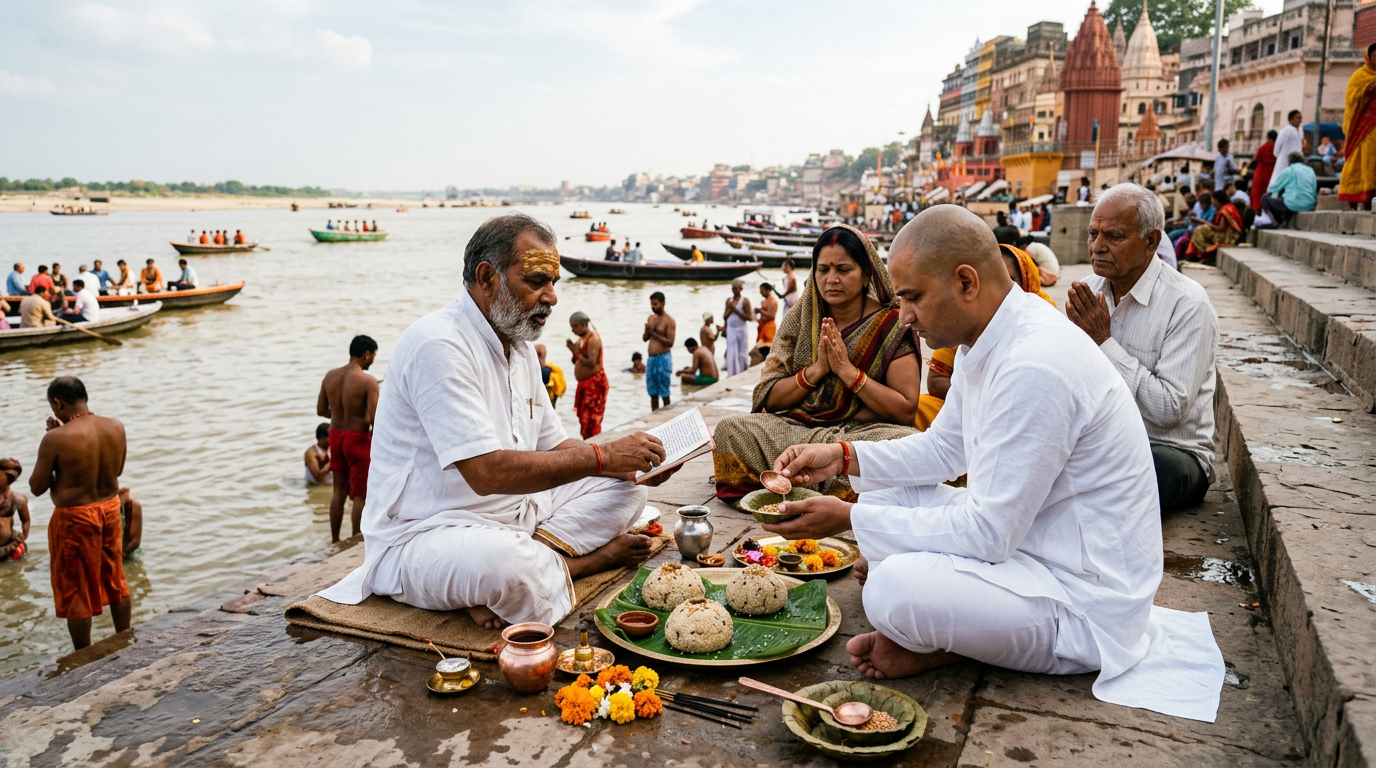
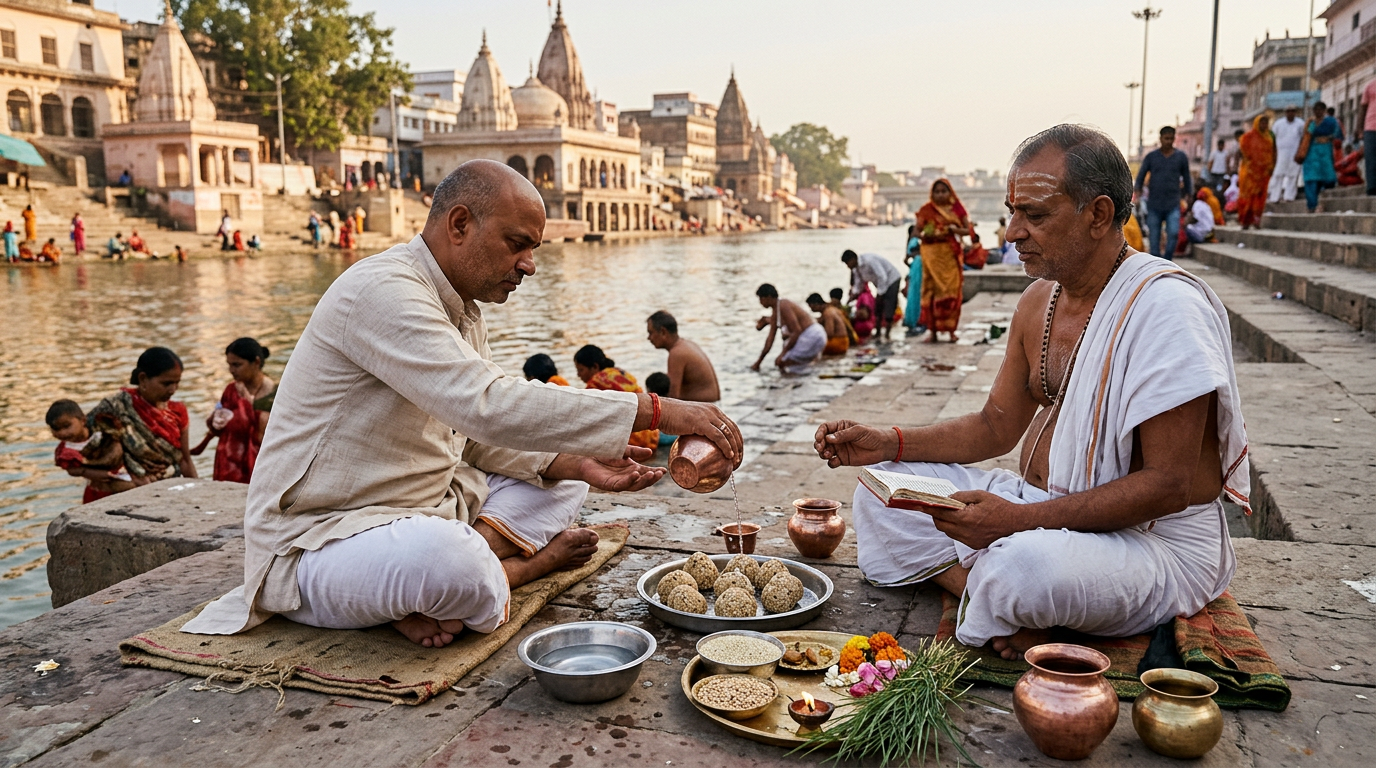
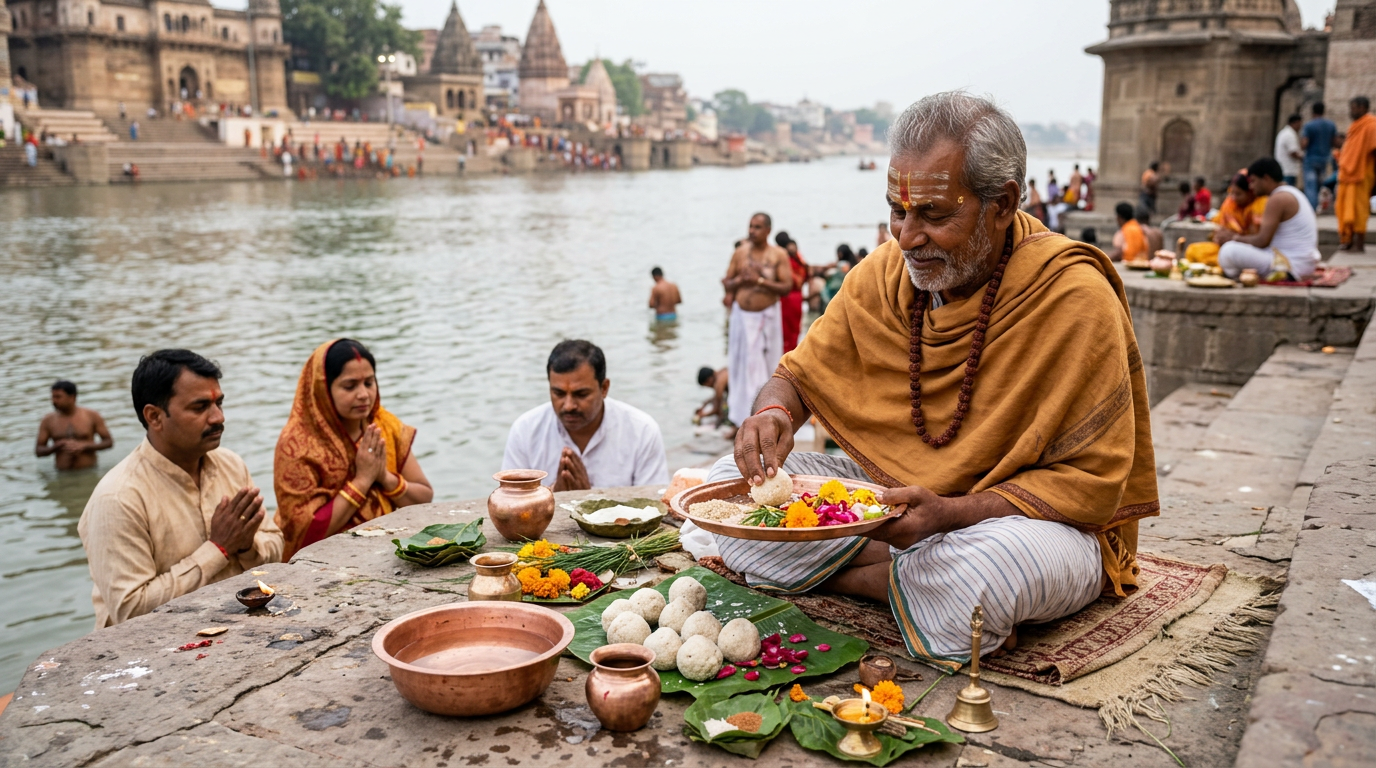
All major pujas performed in accordance with vedic tradition for the liberation of ancestors and the wellbeing of the family
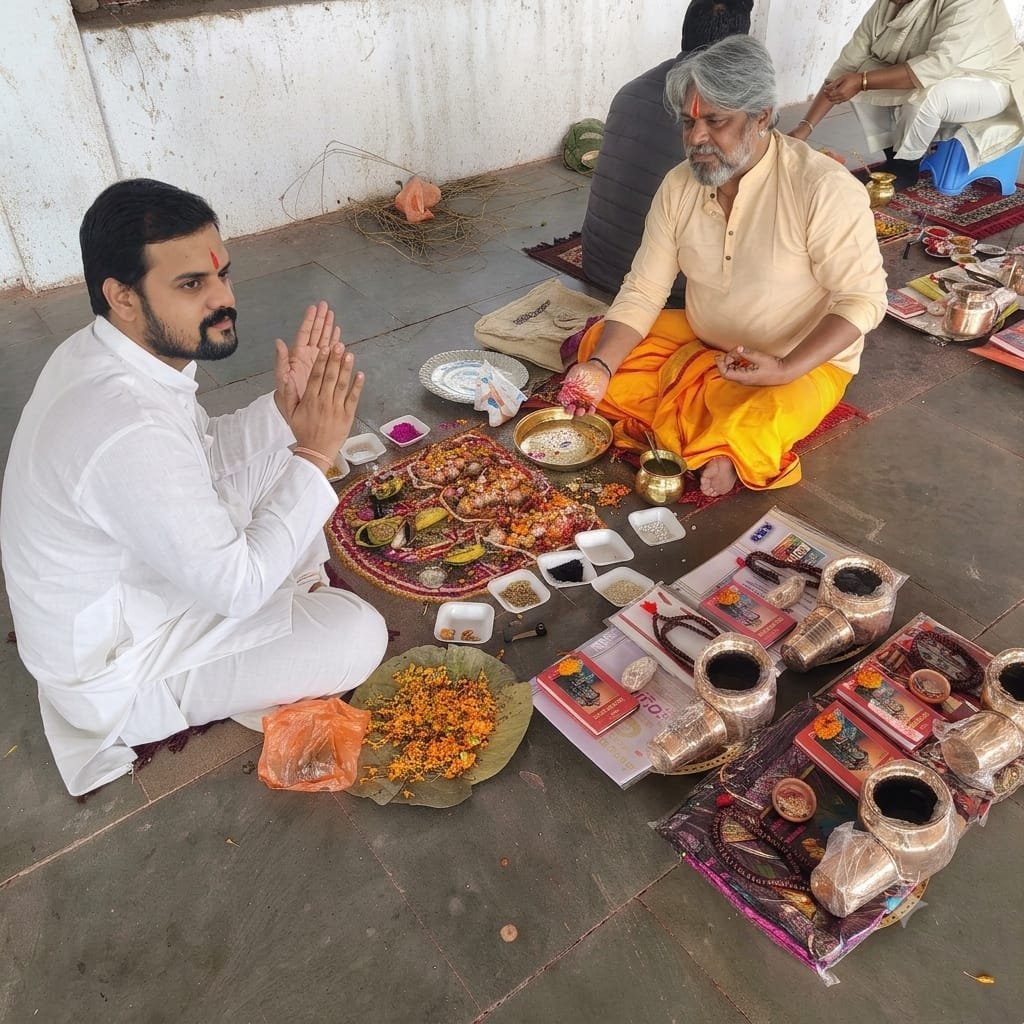
Located in the state of Bihar, Gaya Ji is one of India's most sacred and ancient pilgrimage sites. According to mythology, Lord Vishnu himself granted a boon to the demon Gayasur that whoever comes to Gaya Ji and performs Pind Daan and Shradh for their ancestors would grant those ancestors moksha (liberation).
This is why millions of devotees from India and abroad visit Gaya Ji every year for the peace of the souls of their departed parents, grandparents and ancestors. Pind Daan performed here on the banks of the Phalgu River, within the Vishnupad Temple premises, and beneath the Akshayavat is believed to bear everlasting fruit.
The Garuda Purana and Vayu Purana, among many other scriptures, describe Gaya Ji as the supreme place for ancestral moksha. It is believed that Shradh performed at Gaya Ji is more fruitful and lasting than at any other pilgrimage site in India — because Lord Vishnu's own footprint (Vishnupad) is enshrined here.
Performing Pind Daan here satisfies ancestors across three generations and frees the family from Pitra Rin (ancestral debt). This is why, in Hindu tradition, it is believed that every person should visit Gaya Ji at least once in their lifetime to perform Pind Daan for their ancestors, whether or not Shradh has been performed elsewhere.
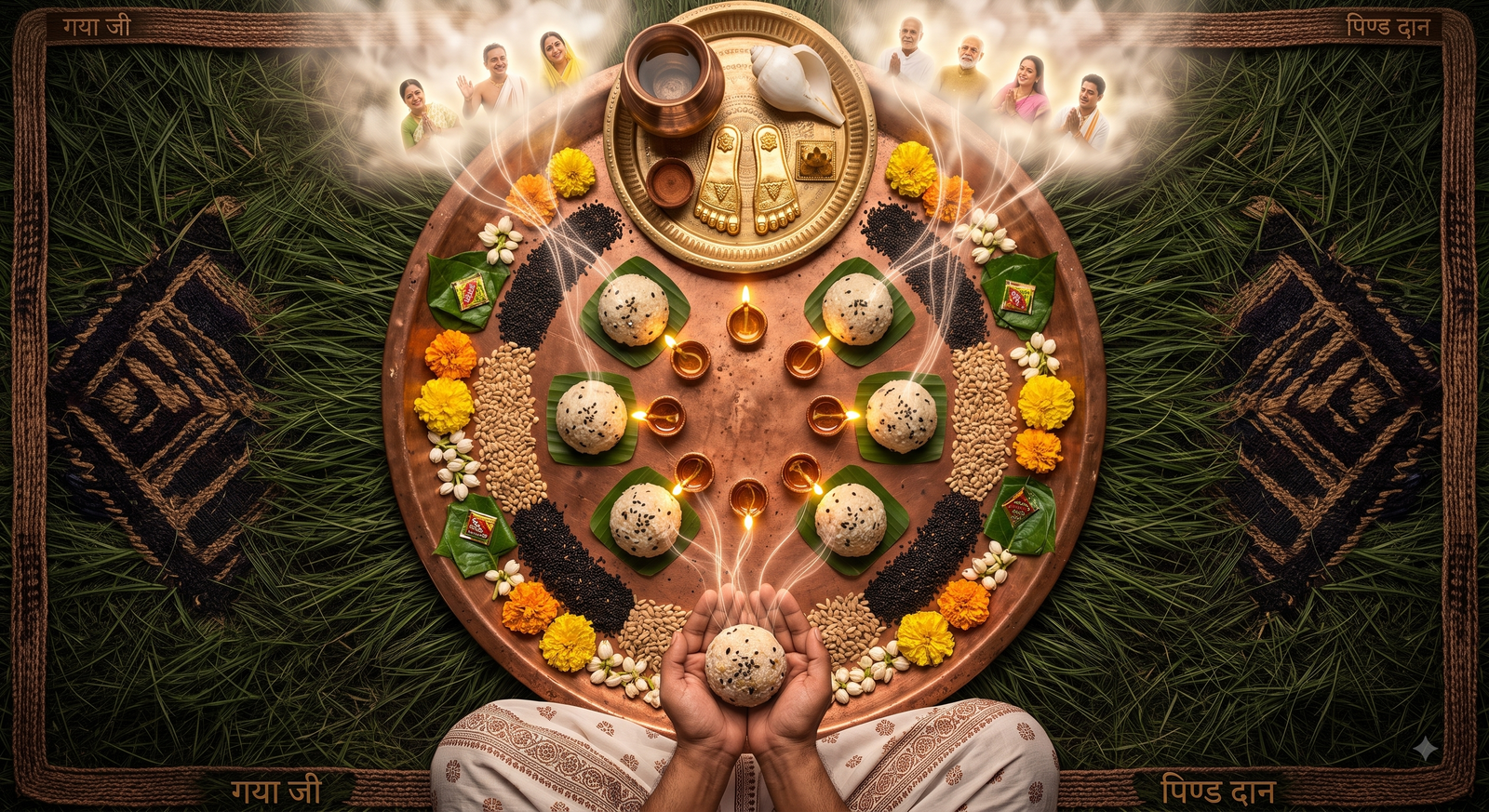
Pind Daan is an ancient vedic ritual in which "Pind" — offerings made of rice, barley flour, sesame seeds and honey — are dedicated to departed ancestors
A ball made of rice, barley flour, black sesame seeds, honey and pure ghee, offered as a symbol of one's ancestors.
After taking a sacred resolution (Sankalp) with the recitation of vedic mantras and a purifying bath, the Pind is offered under the priest's guidance.
According to scripture, every person carries three debts — Dev Rin, Rishi Rin and Pitra Rin. Pind Daan frees a person from Pitra Rin (the debt to one's ancestors).
According to legend, there once lived an extremely pious demon named Gayasur, whose mere touch could grant moksha even to sinners. This caused an uproar in the heavens, as sinners too began attaining liberation without facing the consequences of their deeds.
At the gods' request, Lord Vishnu asked Gayasur to hold his body still for a yagna. Gayasur's body was so vast that the gods performed the yagna upon it, and finally Lord Vishnu placed his own feet upon Gayasur's head, fixing him there forever — this very place is known today as the "Vishnupad Temple".
As his final wish, Gayasur asked for the boon that whoever performed Pind Daan for their ancestors on this sacred land would certainly grant those ancestors moksha. Because of this boon from Lord Vishnu, Gaya Ji is regarded today as the holiest site in the world for ancestral liberation.
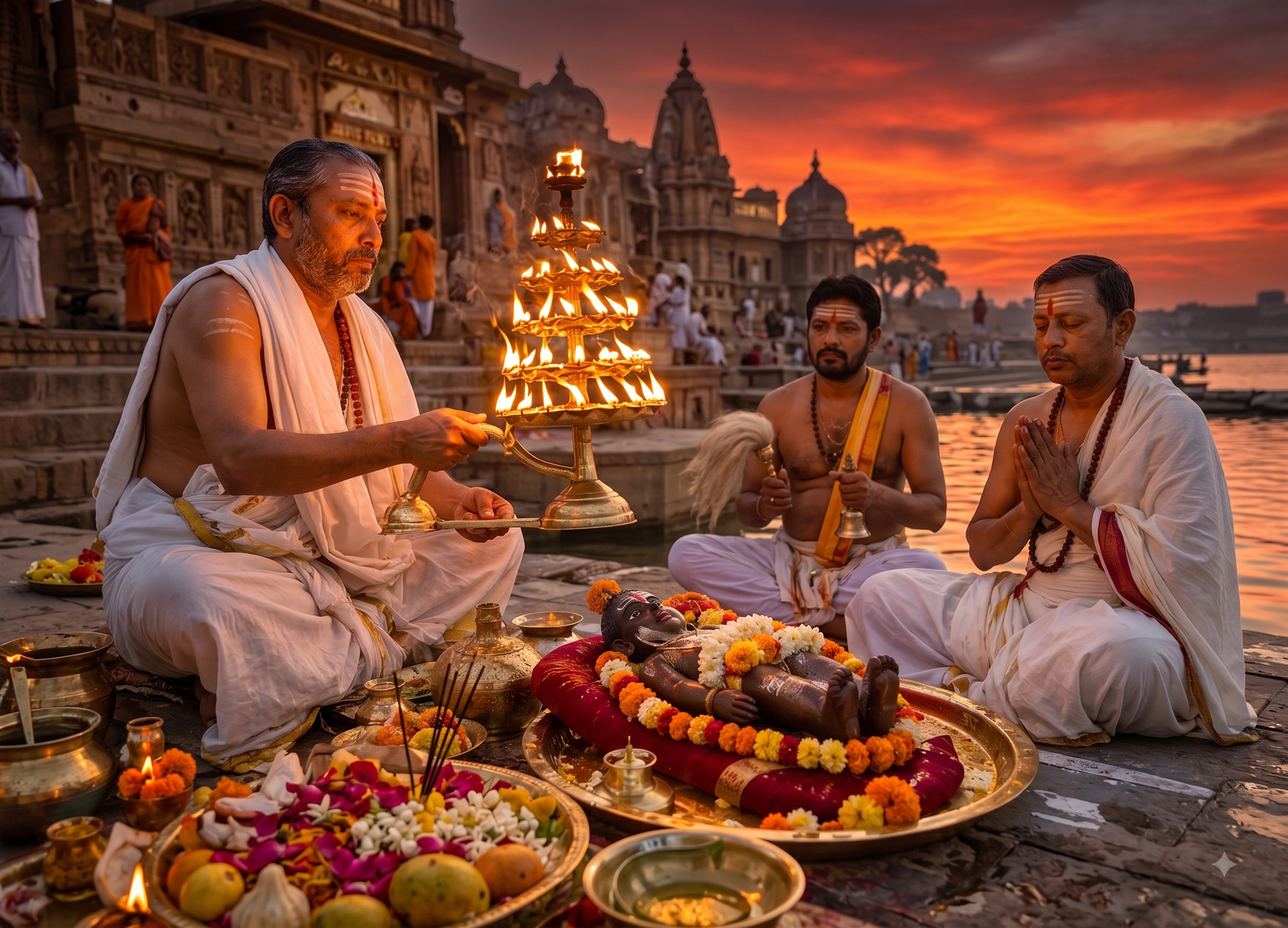
These six sites at Gaya Ji hold immense importance and sanctity for Pind Daan and Shradh rituals
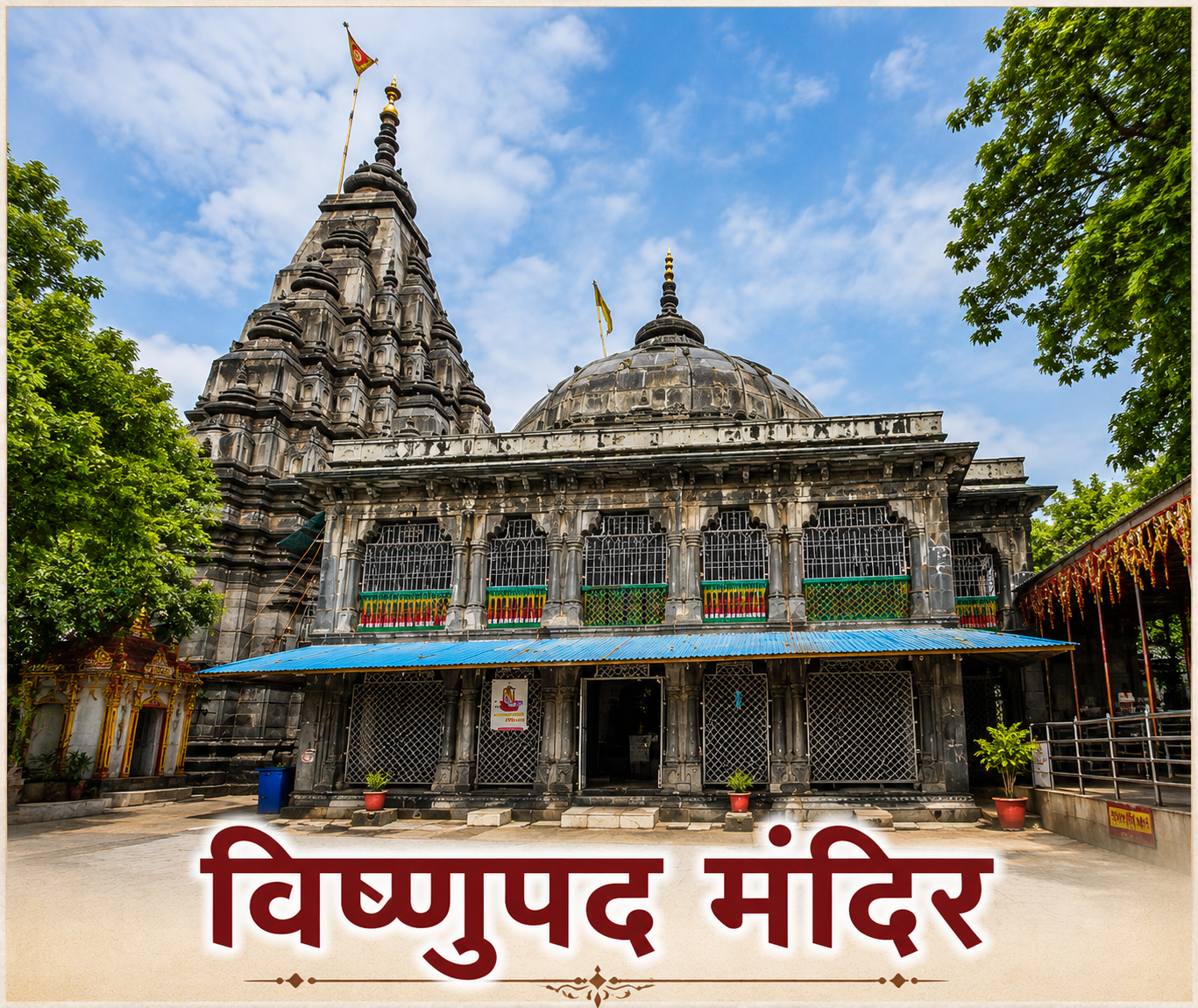
The main Pind Daan ritual is performed at this temple, home to Lord Vishnu's sacred footprint.
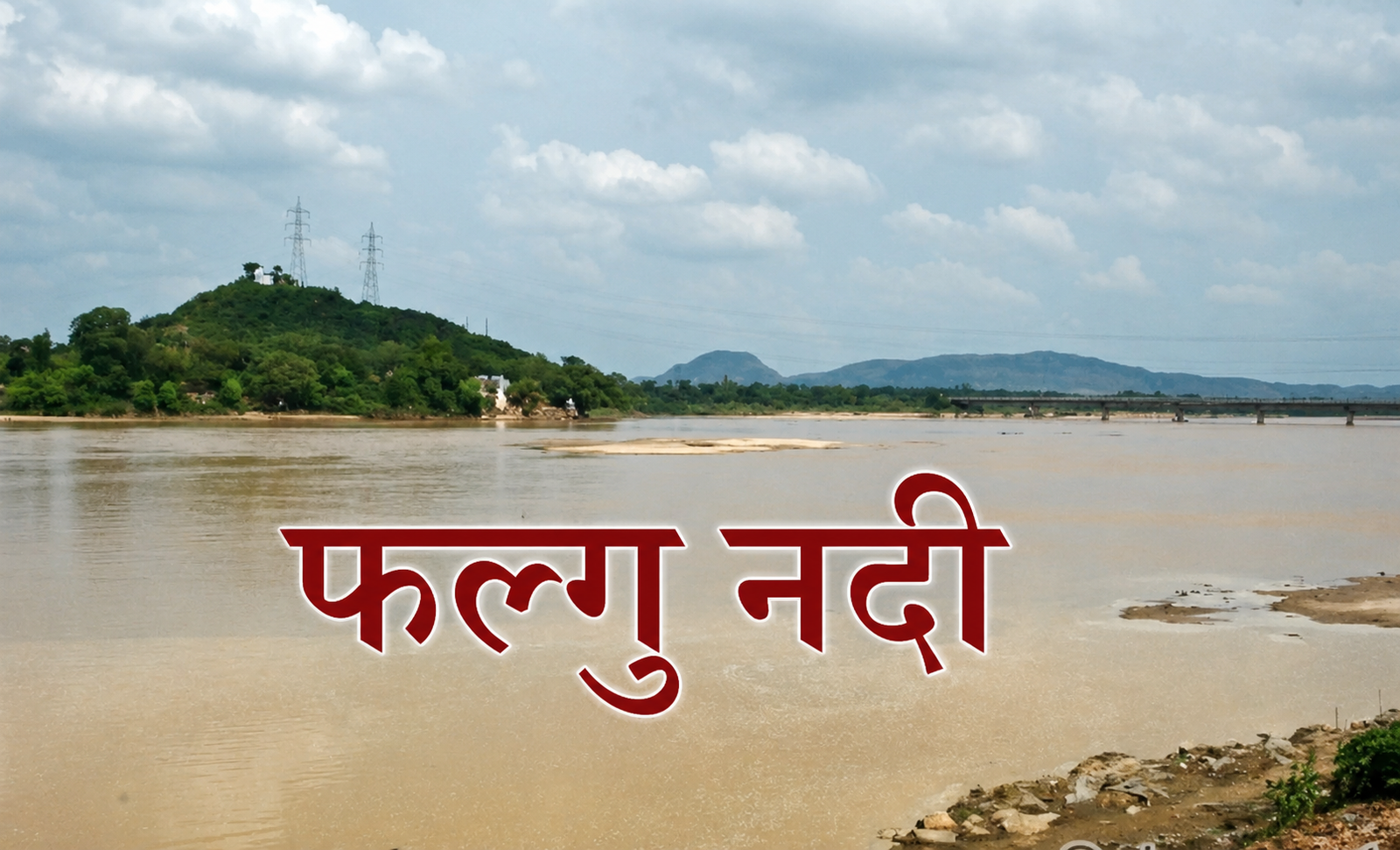
The sacred bank of the Phalgu River, where water offerings (Tarpan) are made to ancestors.
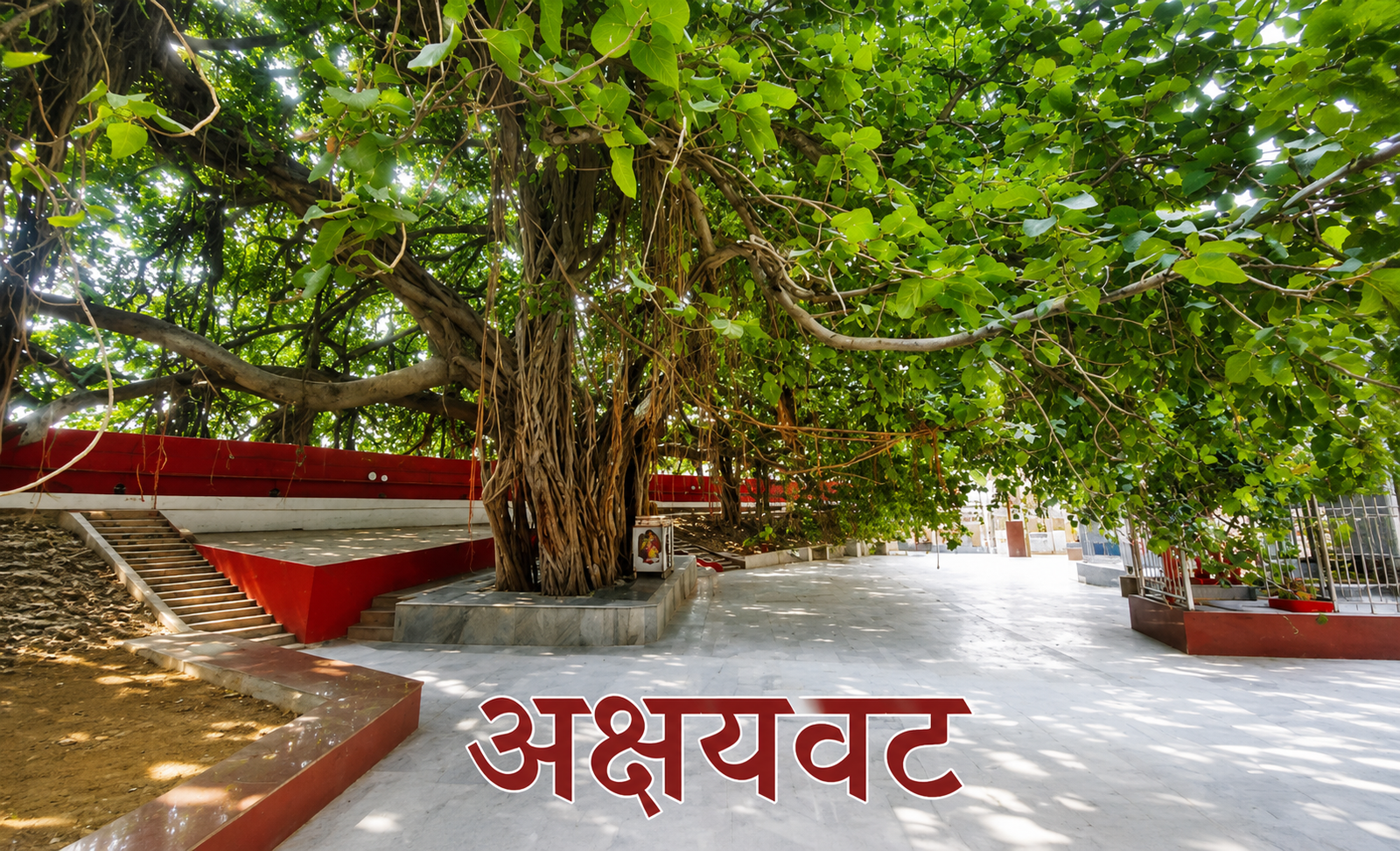
This banyan tree, a symbol of immortality, is believed to grant everlasting merit to Pind Daan performed here.
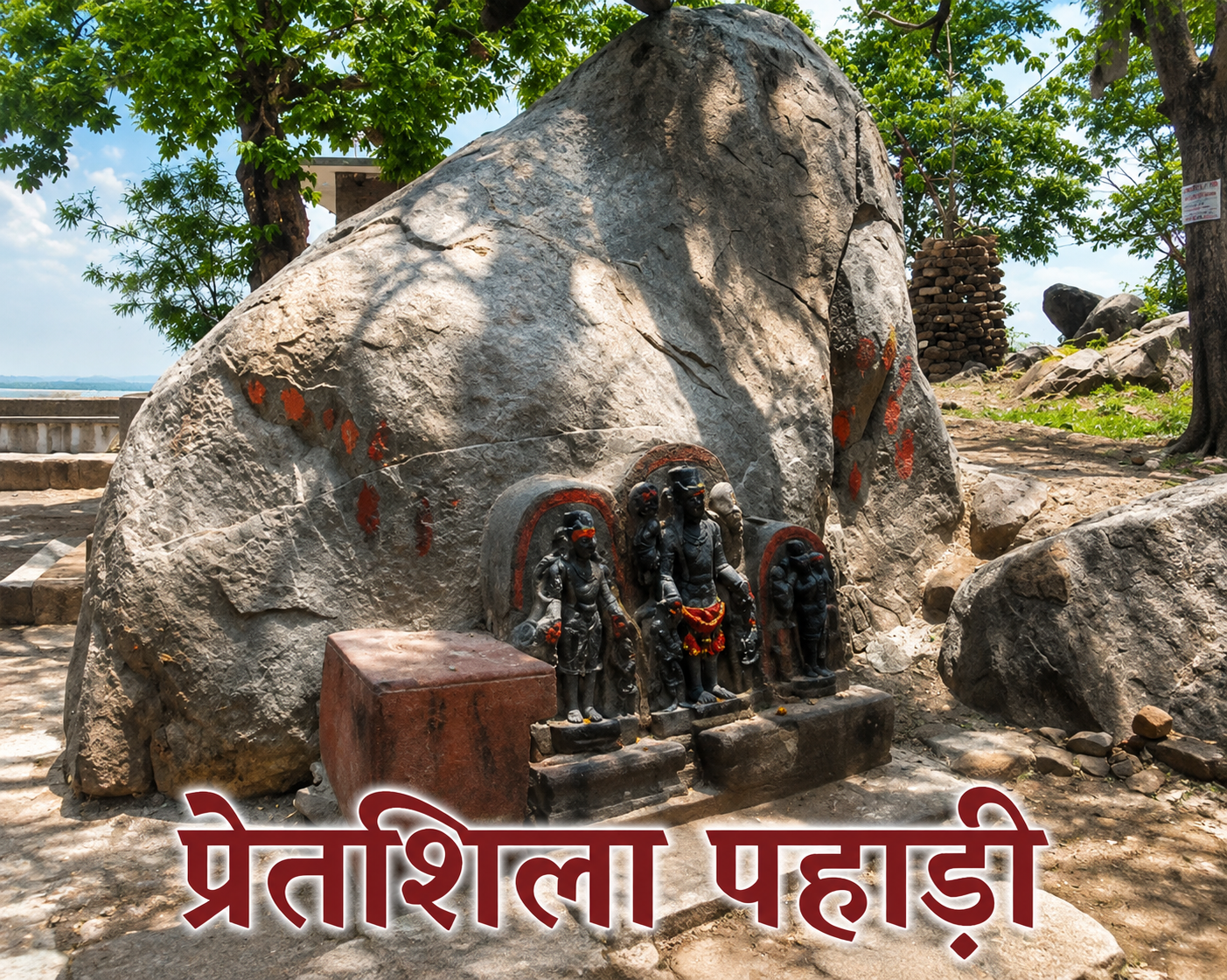
Narayana Bali Puja is performed on this sacred hill for the peace of souls who suffered an untimely death.
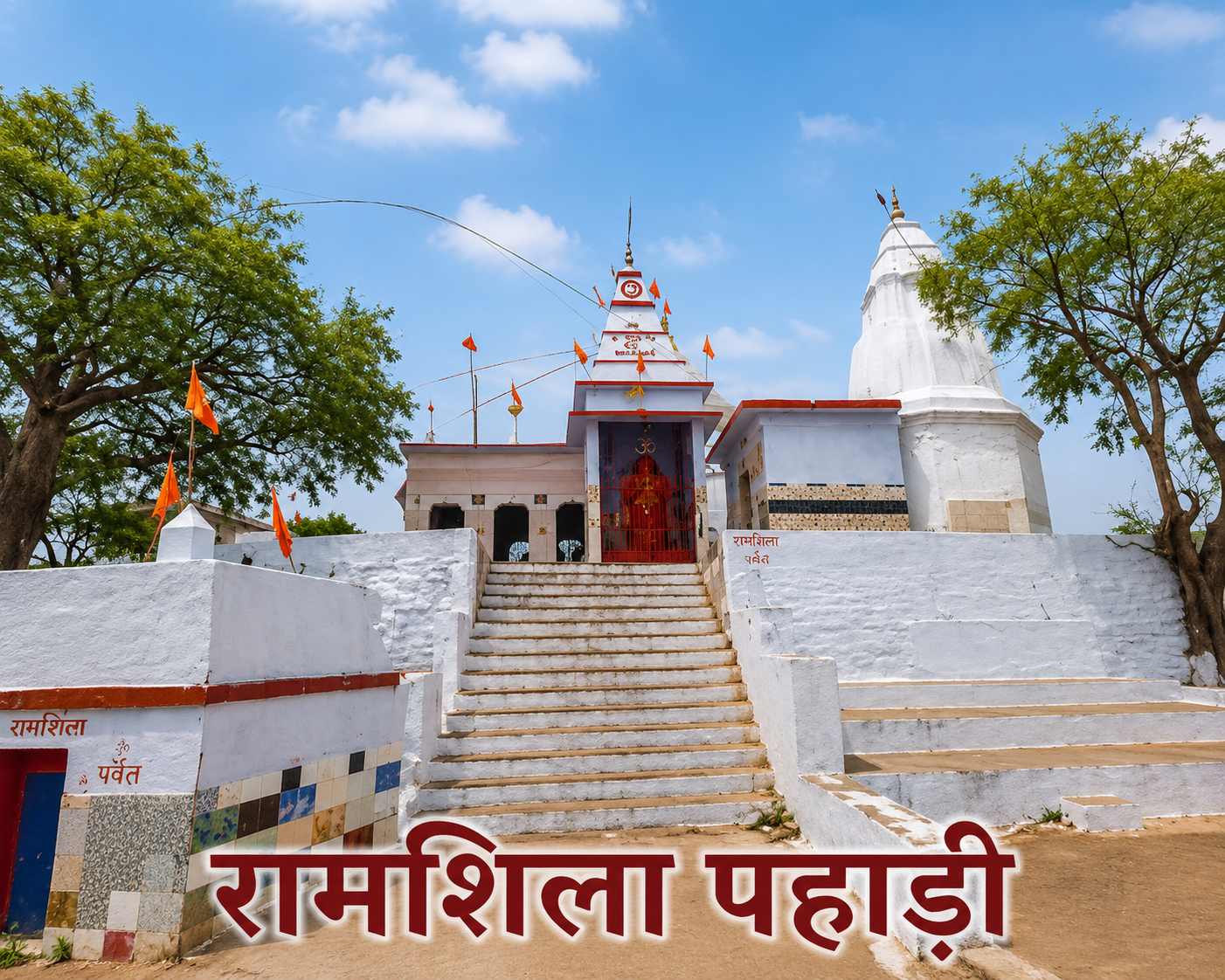
According to tradition, Lord Rama himself performed the Shradh of his father, King Dasharatha, here.
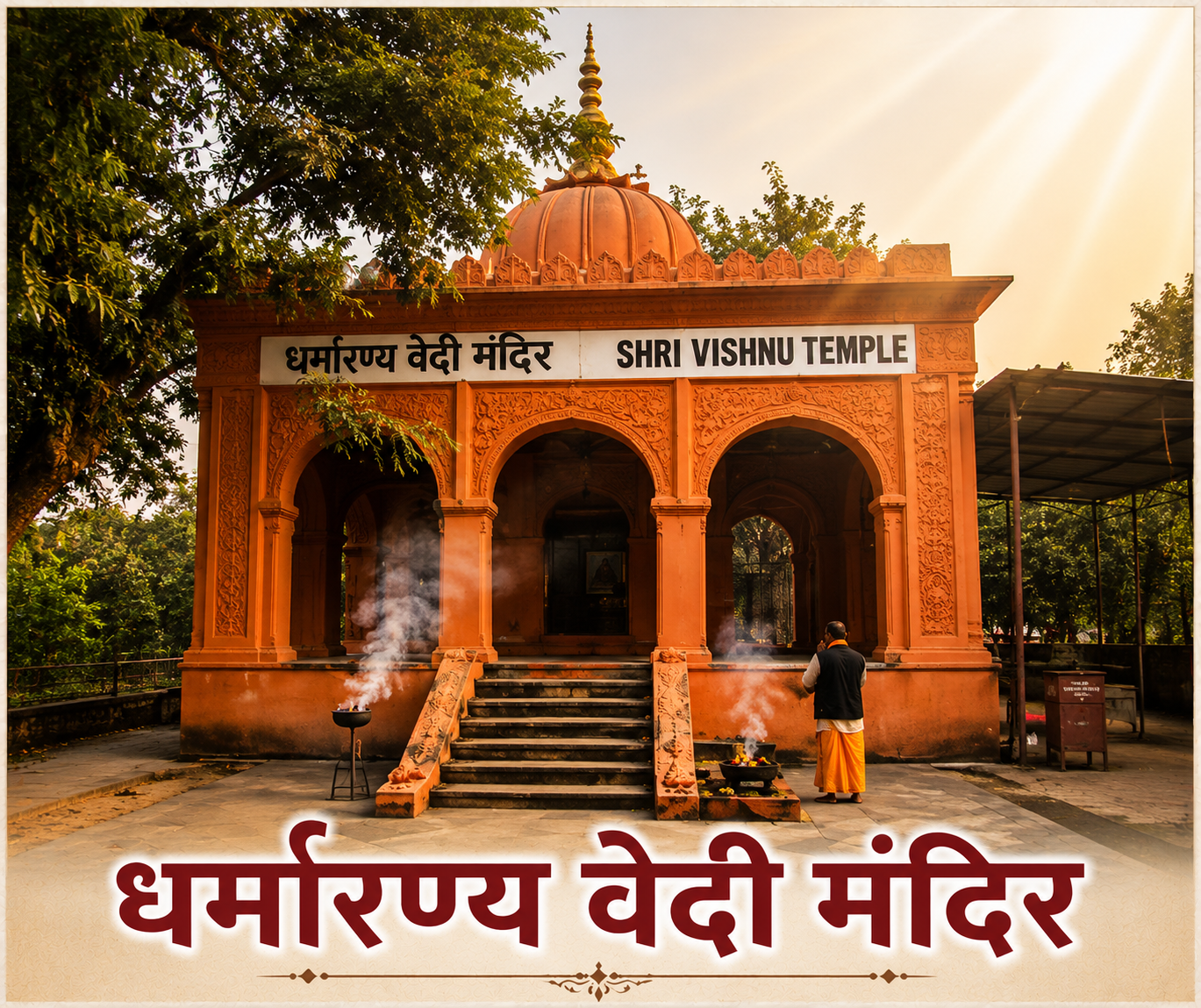
Special Rudra Abhishek and worship are performed at this temple of Lord Shiva, the deity of ancestors.
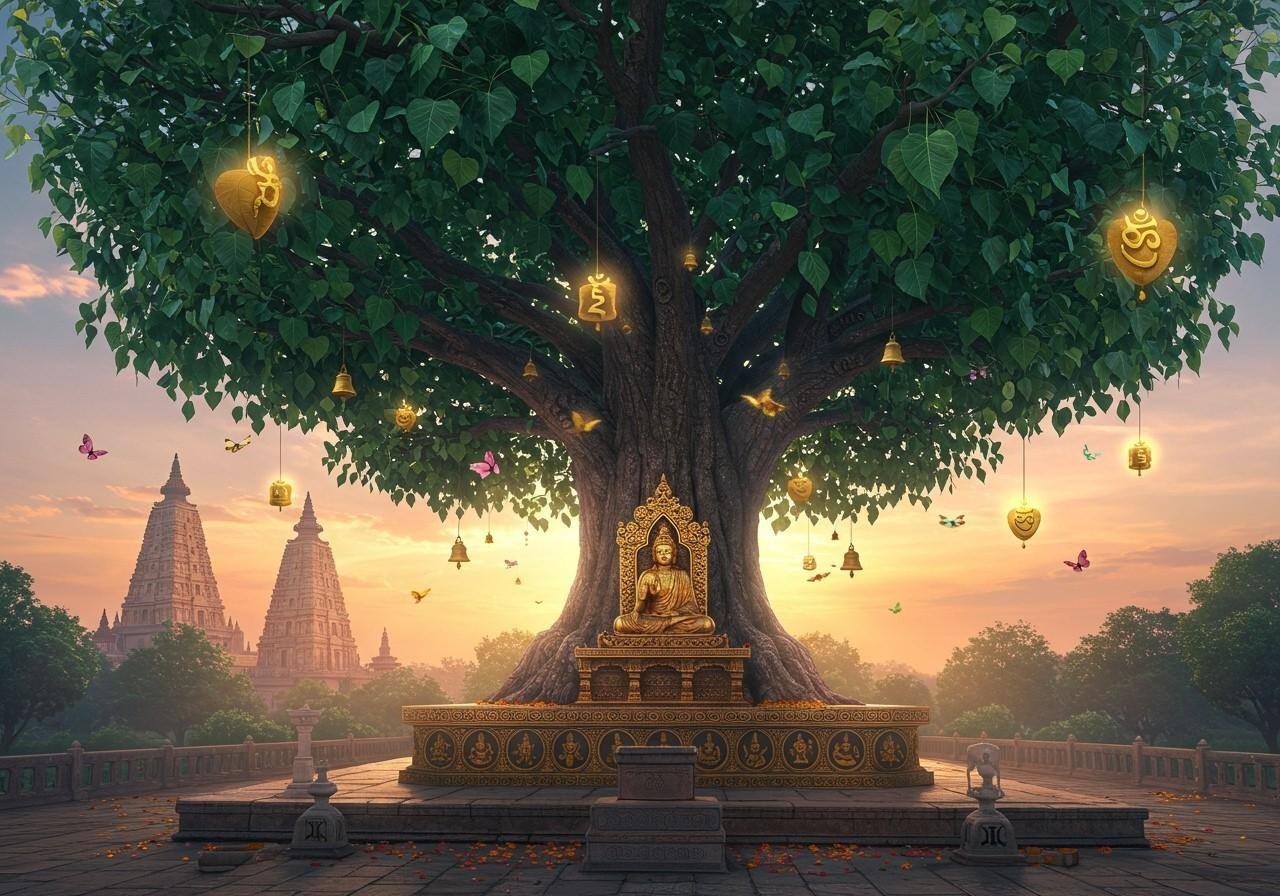
Sacred Bodhi Tree is one of the most revered spiritual sites in Bodh Gaya. According to religious belief, Lord Buddha attained enlightenment while meditating under this tree. Devotees also perform Pitru Tarpan and other religious rituals here, while visiting this sacred place for peace, meditation, and spiritual practice.।
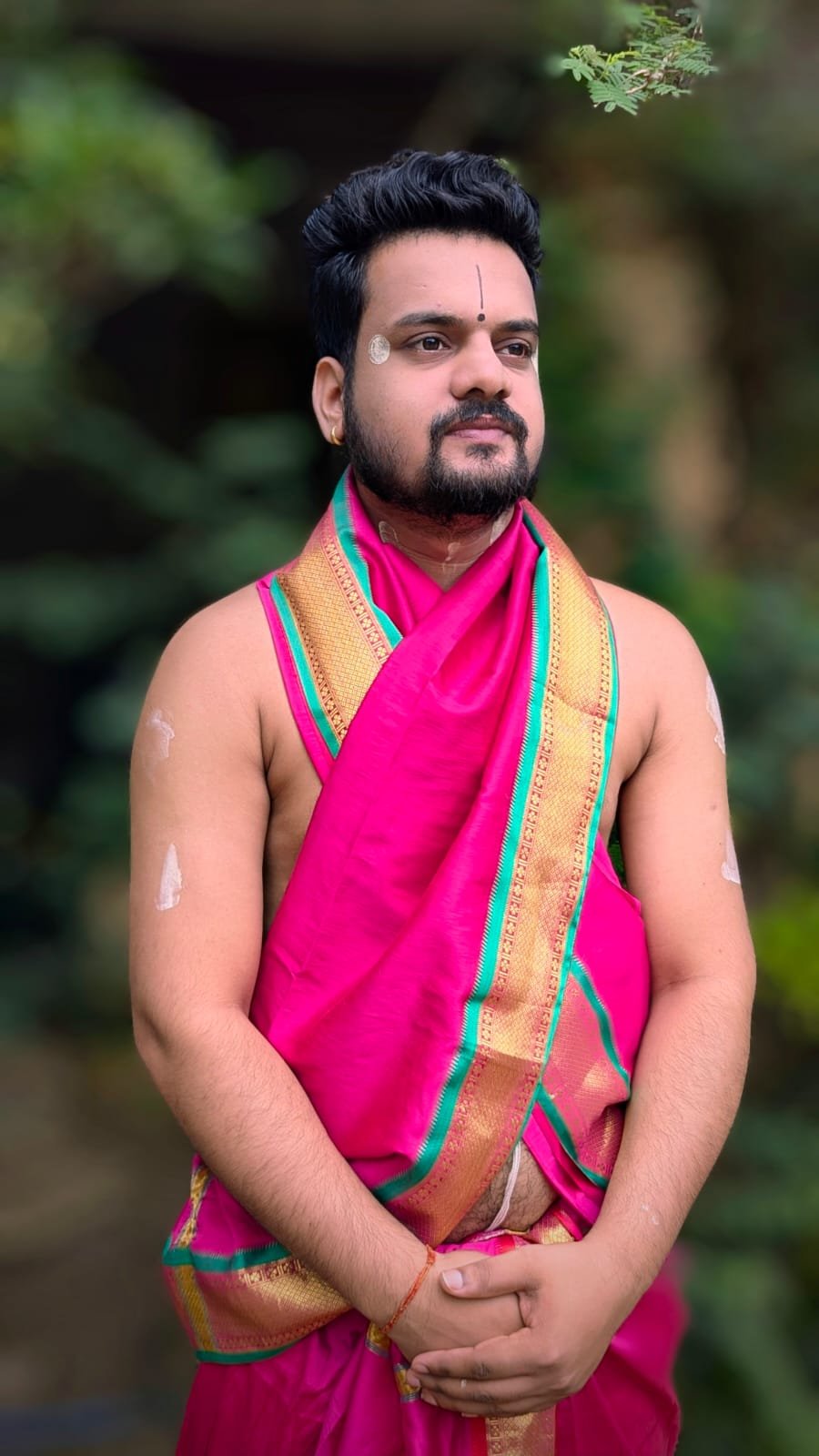
For every devotee, the journey to Gaya Ji is an emotional and spiritual experience — our endeavour is that every ritual is performed with complete devotion, purity and adherence to scripture.
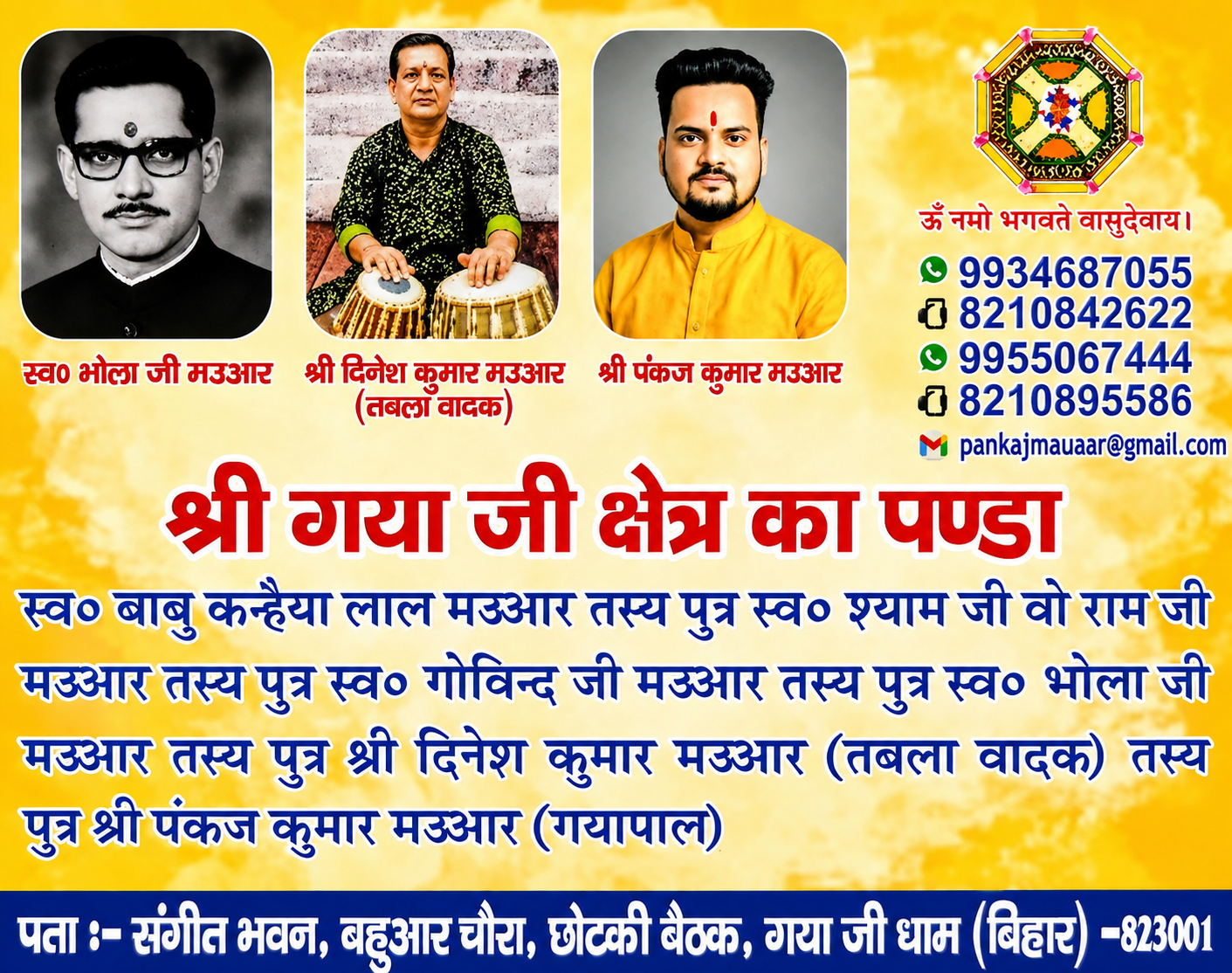
Pt. Pankaj Mauaar belongs to a traditional Gayawal Pandit family of Gaya Ji and has been guiding devotees from India and abroad in Pind Daan, Shradh, Tarpan and Pitra Dosh Nivaran Puja for the past 15 years. Being located close to the Vishnupad Temple, he ensures every family receives personal attention and complete arrangements for their puja.
Pind Daan at Gaya Ji is performed in five main stages
Before beginning the ritual, the devotee takes a sacred resolution (Sankalp).
A purifying bath in the Phalgu River cleanses the body and mind.
Water and sesame seeds are offered to satisfy the ancestors.
Pind offerings are made to ancestors with the recitation of mantras.
The ritual concludes with a meal offered to Brahmins and charity as per one's means.
"Pt. Pankaj Maurar Ji performed Pind Daan and Falgu Tarpan for our ancestors at Gayadham with great devotion and scriptural precision. He guided us at every step. Our whole family returned fully satisfied."
"Our whole family came to Gaya Ji for Tripindi Shradh. We had received all the precise information over the phone before arriving, and had no trouble with touts near the station."
"The Narayan Bali Puja in Gaya Ji was performed with complete religious purity and rituals. Pt. Pankaj Maurar Ji explained the meaning of every mantra and sankalp during the puja. Thank you very much."
Please be sure to contact us by phone before arriving in Gaya Ji. Beware of touts near the station and along the way.
Contact us directly to confirm a date, learn about puja materials, or ask any question — our team is with you at every step.
Bahuaar Chaura Near Tilha Dharmshala Gayaji Bihar 823001
Fill in the form and our team will contact you shortly